| Название бренда: | HUAKE |
| Номер модели: | Я81т-315 |
| минимальный заказ: | 1 комплект |
| цена: | USD15000-USD 35000 |
| Срок поставки: | 60ДНЕЙ |
| Условия оплаты: | Л/К, Т/Т |
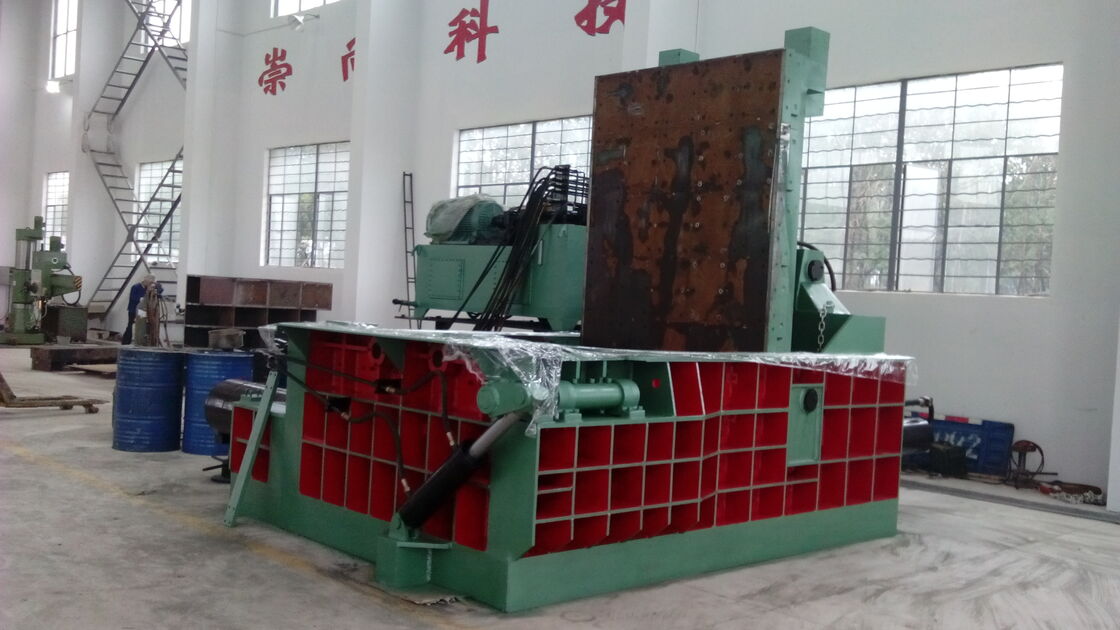
The Y81T-315 hydraulic scrap metal baler is suitable for scrap handling operations that want a defined bale formation process supported by automatic control and a clear discharge method. The PDF specifies PLC automatic control with remote controller and side push-out bale discharge, which makes this page version especially relevant for buyers comparing machine workflow and control format.
The machine also combines a 3150 kN main cylinder, a large chamber, and a listed bale density of not less than 2000 kg/m³, giving the workflow angle a measurable technical foundation.
This version is best suited to operations that need a more repeatable baling workflow, including scrap yards and processing facilities where control method, discharge path, and bale format are important in addition to raw force class.
The throughput figure is given for steel scrap, so steel scrap handling remains the clearest supported material reference from the source file.
The machine is listed with PLC automatic control, which supports a more standardized operating sequence than a page that only emphasizes force or output.
The remote controller is part of the stated control method and can be presented as a practical operating feature.
The side push-out method gives buyers a clear reference for how bales leave the chamber after compression.
The workflow is supported by measurable figures including 3150 kN main compression force, ≥2000 kg/m³ bale density, about 130 seconds empty-load cycle time, and about 6–10 tons/hour steel scrap output.
Scrap is loaded into the chamber, compressed by the hydraulic cylinder system, and then discharged from the machine using the side push-out bale discharge method. The process is governed by PLC automatic control with remote controller, which provides a documented operating framework in the specification sheet.
The chamber size is 3000 × 2000 × 1200 mm, and the final bale size is (600–1000) × 600 × 600 mm, creating a defined output range that fits a more standardized handling workflow.
Choose this machine when operating workflow matters as much as force class. If your team wants a baler with a clearly stated PLC control method, remote operation support, and a defined side push-out discharge path, this configuration is easier to evaluate and explain internally.
This angle is also useful when buyers compare not only tonnage, but also how the machine fits into existing yard handling routines, operator practice, and bale removal layout.
In many scrap operations, the challenge is not only compressing material, but doing so with a repeatable workflow. This machine helps solve that issue by combining a specified control method, a stated discharge method, and measurable bale output data in one published configuration.
It also helps reduce ambiguity during equipment comparison because the page can describe control, discharge, chamber size, bale format, and output with specific values instead of general automation language.
The machine uses PLC automatic control with remote controller.
The bale discharge method is side push-out.
The compression chamber size is 3000 × 2000 × 1200 mm.
The listed bale size is (600–1000) × 600 × 600 mm.
The machine is listed at about 6–10 tons/hour for steel scrap.
One thing to fix before publishing: the uploaded file name says Y81T-315B, while the first page of the PDF says Y81T-315A. It is better to unify the model reference first.
The Y81T-315 hydraulic scrap metal baler is suitable for scrap handling operations that want a defined bale formation process supported by automatic control and a clear discharge method. The PDF specifies PLC automatic control with remote controller and side push-out bale discharge, which makes this page version especially relevant for buyers comparing machine workflow and control format.
The machine also combines a 3150 kN main cylinder, a large chamber, and a listed bale density of not less than 2000 kg/m³, giving the workflow angle a measurable technical foundation.
This version is best suited to operations that need a more repeatable baling workflow, including scrap yards and processing facilities where control method, discharge path, and bale format are important in addition to raw force class.
The throughput figure is given for steel scrap, so steel scrap handling remains the clearest supported material reference from the source file.
The machine is listed with PLC automatic control, which supports a more standardized operating sequence than a page that only emphasizes force or output.
The remote controller is part of the stated control method and can be presented as a practical operating feature.
The side push-out method gives buyers a clear reference for how bales leave the chamber after compression.
The workflow is supported by measurable figures including 3150 kN main compression force, ≥2000 kg/m³ bale density, about 130 seconds empty-load cycle time, and about 6–10 tons/hour steel scrap output.
Scrap is loaded into the chamber, compressed by the hydraulic cylinder system, and then discharged from the machine using the side push-out bale discharge method. The process is governed by PLC automatic control with remote controller, which provides a documented operating framework in the specification sheet.
The chamber size is 3000 × 2000 × 1200 mm, and the final bale size is (600–1000) × 600 × 600 mm, creating a defined output range that fits a more standardized handling workflow.
Choose this machine when operating workflow matters as much as force class. If your team wants a baler with a clearly stated PLC control method, remote operation support, and a defined side push-out discharge path, this configuration is easier to evaluate and explain internally.
This angle is also useful when buyers compare not only tonnage, but also how the machine fits into existing yard handling routines, operator practice, and bale removal layout.
In many scrap operations, the challenge is not only compressing material, but doing so with a repeatable workflow. This machine helps solve that issue by combining a specified control method, a stated discharge method, and measurable bale output data in one published configuration.
It also helps reduce ambiguity during equipment comparison because the page can describe control, discharge, chamber size, bale format, and output with specific values instead of general automation language.
The machine uses PLC automatic control with remote controller.
The bale discharge method is side push-out.
The compression chamber size is 3000 × 2000 × 1200 mm.
The listed bale size is (600–1000) × 600 × 600 mm.
The machine is listed at about 6–10 tons/hour for steel scrap.
machine pictures
![]()
![]()
bale pictures:
![]()
How to choose your baler correctly?
We will ask you to offer some details
Like what material you need to bale. Pictures best,
How many tons per hour output is needed.
And bale size restrictions
Bale ejection ways preference.
Other machines on sites .etc
Then we will give a most suitable solution for you.
we will also offer similar user sites vedio for your reference, maybe in your same country we have users also.
Watch The Video:
Youtube: https://www.youtube.com/watch?v=QHD1xZvVTQY